
How Non-Combustible Fencing Can Help Reduce Fire Exposure Near Buildings
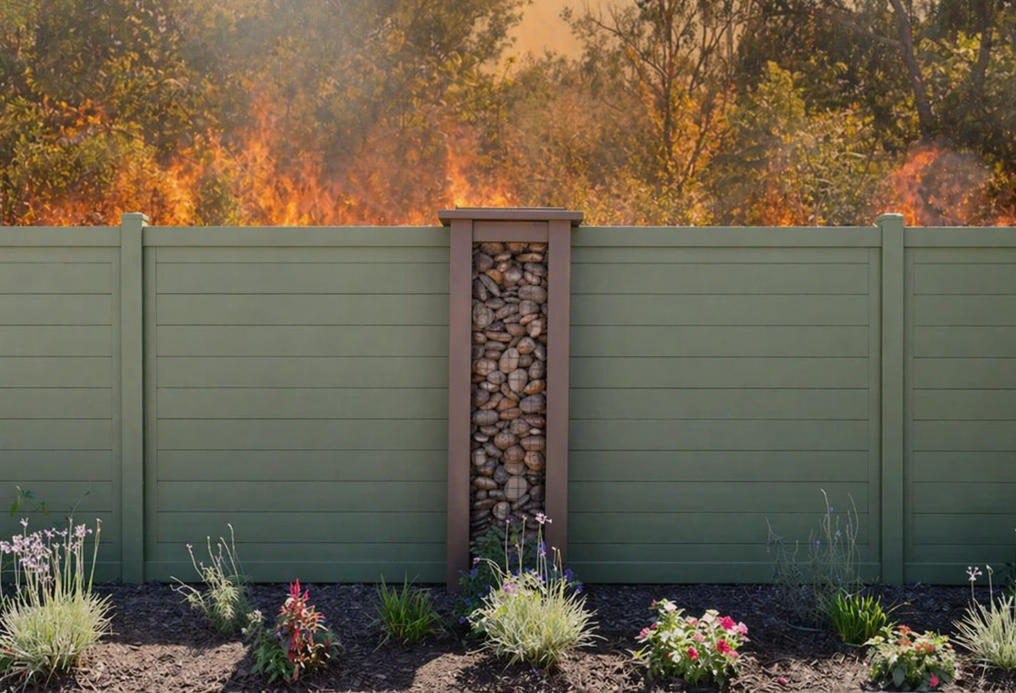
Most homeowners think about wildfire protection in terms of vegetation: clearing brush, trimming trees, removing dry grass from around the structure. That's important. But research consistently points to something else as the most underestimated fire risk at the property level: the fence.
Not because fences are inherently dangerous, but because a combustible fence in the wrong location does something specific and measurable. It creates a continuous fuel path from the perimeter of your property directly to your home's structure. And in a wildfire, that path is exactly what fire follows.
Non-combustible fencing breaks that path. This article explains the science behind why it matters and what it actually does to reduce fire exposure near buildings.
How Homes Actually Ignite in Wildfires
There's a widespread misconception that homes burn in wildfires because a wall of flame overtakes them. Research from NIST, the Insurance Institute for Business and Home Safety (IBHS), and post-fire investigations consistently tell a different story.
Most homes that burn in wildfires are ignited by embers, not direct flame contact. Embers are small pieces of burning debris, typically wood or vegetation, that become airborne during a wildfire and are carried by wind ahead of the main fire front. They can travel miles from the original fire, landing silently on rooftops, in gutters, on decks, and against fences.
A 2007 study of the Witch and Guejito fires in San Diego County found that embers were involved in nearly every home that was lost. During the 2025 Palisades and Eaton fires in Los Angeles County, floating embers were identified as the primary driver of fire spread into built-up neighborhoods.
The practical implication is significant: your fence doesn't need to be in the path of a moving flame front to become a problem. A single ember landing on a dry wood fence panel under Red Flag conditions is sufficient to start the sequence.
The Fence as a Fire Pathway
When researchers and fire engineers talk about fences creating fire pathways, they mean something specific. A fence isn't just a fuel source. It's a directional fuel source that physically connects the exterior of your property to your structure.
Here's how the sequence typically unfolds:
An ember lands on or between the slats of a wood fence. Research from Worcester Polytechnic Institute has documented how embers accumulate in the gaps between wood fence slats, gathering and working together to sustain ignition in a way a single ember could not. Once the fence ignites, it doesn't burn in place. Fire travels along the fence line toward the structure. If the fence runs adjacent to an exterior wall, a deck, or any combustible attachment, the fire now has a continuous fuel bridge to reach it.
Once the fence is burning against a structure, the exposure shifts from ember ignition to radiant heat. Burning materials within a few feet of a wall or window generate radiant heat intense enough to ignite adjacent surfaces without direct flame contact. According to research cited by Berkeley FireSafe, radiant heat from burning fences is one of the specific mechanisms by which homes ignite even when the main fire front hasn't arrived.
The FEMA building guidance specifically cites wind-driven fire spread from fences as a documented and studied pathway, and recommends using metal or stone fence materials where a house and wooden fence meet within the 5-foot zone.
Why Zone Zero Targets Fences Specifically
California's Zone Zero framework, which requires non-combustible or ignition-resistant materials within 0 to 5 feet of a structure, was developed in direct response to research on how homes ignite. Fences were specifically identified as a primary ignition pathway in that research.
The 5-foot buffer is not arbitrary. It reflects the distance within which a burning fence can generate sufficient radiant heat to ignite exterior wall materials, window frames, and eave structures. Beyond that distance, the radiant heat exposure decreases significantly. Within it, a burning combustible fence is a direct structural threat.
This is why Zone Zero compliance specifically addresses fence materials, not just vegetation. Clearing brush within 5 feet of your home while leaving a wood fence running along the exterior wall only partially solves the problem. The fence itself remains a continuous ignition pathway.
What Non-Combustible Fencing Actually Does
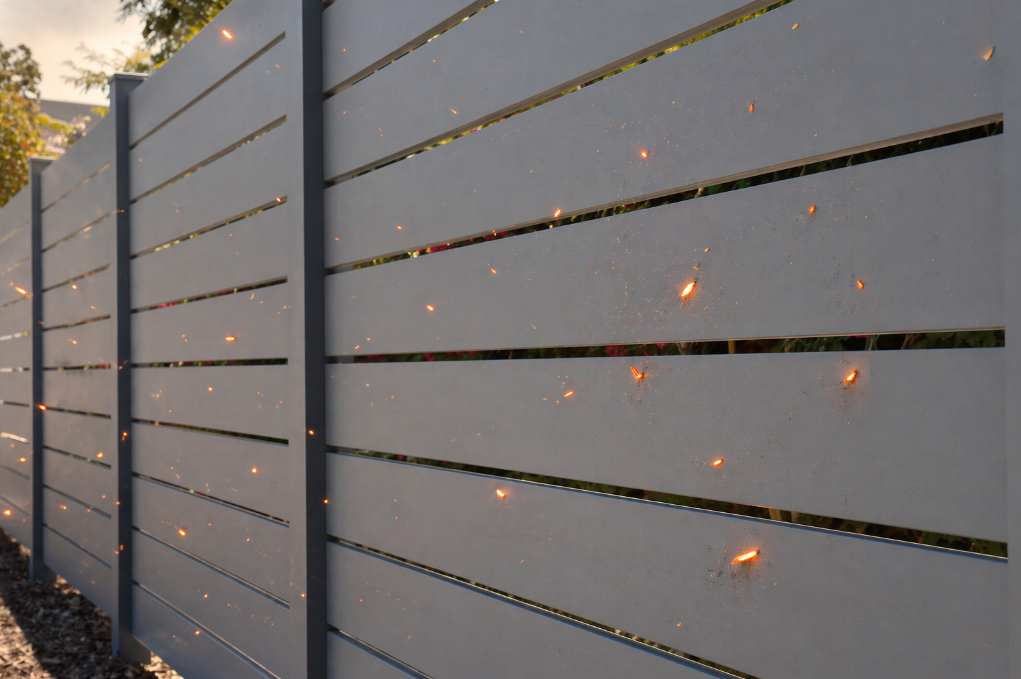
Non-combustible fencing interrupts the fire pathway at its source. A fence built from a material that cannot ignite or sustain combustion does not become a fuel source regardless of how many embers land on it or how close the fire front approaches.
The practical effects are specific:
Ember Accumulation Without Ignition
Embers that land on a steel fence panel do not find a fuel source. They land on a non-combustible surface, cool, and die. The accumulation and ignition dynamic that makes wood fence slats so dangerous does not occur.
No Directional Fuel Path
Because the fence cannot ignite, it cannot carry fire along its length toward the structure. The connection between the perimeter of the property and the building’s exterior wall is effectively broken.
Reduced Radiant Heat Exposure
A fence that does not burn does not generate radiant heat. The thermal exposure your home’s exterior wall faces is significantly lower when the adjacent fence is non-combustible steel instead of burning wood.
Protection Against Ember-Generated Secondary Fires
Burning wood fences do not only threaten the adjacent structure. They also produce embers that can travel downwind and ignite nearby properties. A non-combustible fence removes a key source of secondary ember generation from your property.
Non-Combustible Fencing Materials: What Qualifies
Not all materials described as fire-resistant or low-combustibility actually meet the standard for non-combustible. Here's the technical distinction that matters for fence selection:
A material is classified as non-combustible under ASTM E136 testing when it does not ignite, does not cause temperature to rise beyond specified thresholds, and does not lose more than 50 percent of its mass when exposed to a furnace at 750 degrees Celsius. This test measures the material itself, not a surface coating or chemical treatment.
Steel is non-combustible under ASTM E2768. Hot-dipped galvanized steel specifically also carries an ASTM Class A Fire Rating (Zero Flame Spread), which means it does not contribute to surface flame spread even under sustained fire exposure. MWF Solutions steel fence panels are listed on the CAL FIRE approved building materials list under Greenfield Metal Systems Inc. dba MWF, Listing #8170, Ignition-Resistant Materials.
Aluminum is non-combustible under ASTM E2768. It does not ignite or sustain combustion. However, aluminum melts at approximately 1,220 degrees Fahrenheit, which means it can fail structurally under sustained high-temperature exposure. Not all aluminum fencing products carry CAL FIRE listing for Zone Zero compliance.
Masonry and concrete are non-combustible and provide strong thermal mass. They are inherently fire-resistant but cost more, require more permitting, and are less flexible than metal panel systems for residential applications.
Fire retardant treated wood is not non-combustible. It is still a combustible material. Chemical treatment slows ignition and reduces flame spread but does not prevent combustion. It does not satisfy Zone Zero requirements.
Composite fencing is generally combustible. Some composite products carry Class A ratings under ASTM E84 (flame spread), but that is not the same as being non-combustible. Composite materials can and do ignite under sustained fire exposure.
The Specific Value for Buildings Near Wildland-Urban Interface
Properties at the wildland-urban interface, where developed residential areas meet undeveloped wildland vegetation, face the highest ember exposure during wildfires. In these locations, non-combustible fencing provides the most direct structural benefit because the volume and frequency of ember exposure during a fire event is highest.
During the Lahaina fire in Maui, post-fire analysis by IBHS found that connective fuels, including fences, created pathways for fire to move from wildland vegetation into the community and then from structure to structure. The same pattern has been documented in multiple California wildfires. Fences that connect wildland-adjacent perimeters to residential structures are among the highest-priority replacement targets for homeowners near the urban-wildland boundary.
Non-combustible perimeter fencing doesn't stop a wildfire. What it does is remove one of the most direct physical pathways by which a wildfire reaches your home's exterior walls.
Non-Combustible Fencing and Insurance
California's home insurance market has been significantly affected by wildfire risk. Insurers are increasingly factoring documented home hardening measures into underwriting decisions, and non-combustible fencing with CAL FIRE listing documentation is the type of verifiable improvement that can support coverage negotiations.
The Insurance Institute for Business and Home Safety documents home hardening measures that reduce wildfire risk, and fencing is among the components they address. Properties that can demonstrate Zone Zero compliance with documented non-combustible fencing installations are in a stronger position when dealing with insurers, particularly in high-risk areas where coverage availability has declined.
Keeping records of your fence installation, including the product's CAL FIRE listing number and any AB 38 defensible space inspection results, is worth the effort if your property is in a designated fire hazard severity zone.
Applying This to Your Property
The most important question is where your current fence sits in relation to your structure. Walk the perimeter of your home and identify every point where a fence runs within 5 feet of an exterior wall, deck, gate attachment, or eave overhang. Any combustible fence in that zone is creating the specific exposure this article describes.
The second question is what your fence is connected to at the perimeter of your property. If a wood fence runs from the street or a neighbor's property line directly to your home's exterior without interruption, it creates a continuous fuel path regardless of how much defensible space you've created elsewhere on the lot.
Replacing the Zone Zero section with non-combustible steel fencing addresses both problems: it removes the proximate ignition source and breaks the fuel connectivity between the perimeter and the structure.
MWF Solutions manufactures steel privacy fence products in California, carries in-state inventory for fast delivery, and holds the only widely available CAL FIRE listing for residential fencing under Listing #8170. Installation can typically be completed within two weeks of order, which matters when homeowners are preparing for fire season or responding to active Zone Zero enforcement.
Explore Zone Zero compliant fencing from MWF Solutions
Frequently Asked Questions
What is non-combustible fencing?
Non-combustible fencing is built from materials that do not ignite or sustain combustion when exposed to fire. Under ASTM?? e2768 testing, non-combustible materials do not burn, do not cause significant temperature rise, and do not lose more than 50 percent of their mass when exposed to a furnace at 750 degrees Celsius. Steel and aluminum are the primary non-combustible fencing materials used in residential applications.
Why does non-combustible fencing matter near buildings?
A combustible fence adjacent to a building creates a direct fuel pathway that can carry fire from an ember ignition at the fence line straight to your home's exterior walls. Research from NIST, IBHS, and post-fire investigations consistently identifies fences as one of the most common pathways by which homes ignite in wildfires. Non-combustible fencing breaks that pathway because it cannot ignite or carry fire regardless of ember exposure.
Is fire retardant treated wood the same as non-combustible?
No. Fire retardant treated wood is still combustible. It burns more slowly than untreated wood but it does ignite and sustain combustion. It does not satisfy California's Zone Zero requirements for non-combustible or certified ignition-resistant materials in fire hazard severity zones.
What non-combustible fencing materials are CAL FIRE listed?
For residential fencing, the primary CAL FIRE listed non-combustible option is hot-dipped galvanized steel. MWF Solutions products are listed under Greenfield Metal Systems Inc. dba MWF, Listing #8170, Ignition-Resistant Materials. Not all non-combustible materials are CAL FIRE listed at the product level. Always ask for a specific listing number when evaluating products for Zone Zero compliance.
How does non-combustible fencing reduce ember risk specifically?
Embers that land on a steel fence panel encounter a non-combustible surface. They cool and die without igniting the fence. This prevents the ember accumulation and ignition dynamic that makes wood fence slats particularly dangerous, where embers gather in gaps between slats and generate the sustained heat needed to start a fire. It also prevents the fence from becoming a secondary ember source that can carry fire to downwind structures.
Does replacing just the Zone Zero section of my fence with non-combustible material make a difference?
Yes, meaningfully so. The most critical fire exposure comes from the fence material immediately adjacent to your structure. Replacing the 0 to 5 foot Zone Zero section with non-combustible steel removes the proximate ignition source, reduces radiant heat exposure to the exterior wall, and satisfies the California compliance requirement for that zone. A full perimeter replacement provides broader protection, but the Zone Zero section is the highest priority.