
Fire Resistant Fence Selection 101: What You Need to Know
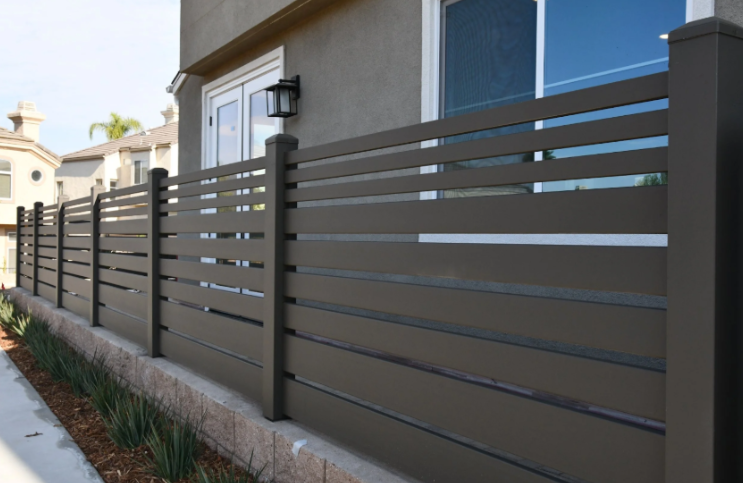
The term "fire resistant fence" gets used loosely in the fencing industry. Some manufacturers apply it to any product that doesn't ignite immediately. Others use it for wood treated with fire retardant chemicals. A few reserve it for materials that have actually been tested and rated under recognized fire standards.
Those are very different things, and for California homeowners in fire hazard zones, the difference matters more than most people realize. Choosing the wrong product based on vague marketing language can mean your fence fails a defensible space inspection, doesn't satisfy Zone Zero requirements, or simply doesn't perform when it matters most.
This guide cuts through the terminology and gives you a clear framework for evaluating fire resistant fence options before you spend a dollar.
What "Fire Resistant" Actually Means
Before evaluating any fence product, it helps to understand what fire resistance claims are actually measuring. There are three distinct concepts that frequently get conflated:
Fire retardant
Fire retardant means a material has been treated with a chemical to slow ignition or reduce flame spread. Fire retardant treated wood is the most common example. It burns more slowly than untreated wood, but it is still combustible. The treatment also degrades over time, particularly with UV and moisture exposure, which is common in California's outdoor environments.
Flame spread rating
Flame spread rating measures how quickly fire travels across the surface of a material. The ASTM E84 standard is the most commonly referenced test. A Class A rating under ASTM E84 means the material has a flame spread index of 25 or less, which is the best classification available. However, a Class A flame spread rating does not mean a material is non-combustible. Some treated wood products carry Class A ratings but are still technically combustible.
Non-combustible
Non-combustible means the material does not ignite, burn, or sustain combustion when exposed to fire. The ASTM E136 standard tests this by exposing materials to a furnace at 750 degrees Celsius. Materials that do not ignite, do not exceed specified temperature thresholds, and do not lose more than 50 percent of their mass pass as non-combustible. Steel and aluminum both qualify. Wood does not, regardless of treatment.
For California Zone Zero compliance, non-combustible is the standard that matters. Not fire retardant, not Class A flame spread alone. Non-combustible.
Why Your Fence Is a Wildfire Risk
Research from the National Institute of Standards and Technology (NIST) consistently identifies embers as the primary cause of home ignition during wildfires, not direct flame contact. Embers travel ahead of the fire front, carried by wind, and land on combustible materials near structures.
A wood fence running along the exterior of your home doesn't need direct flame to ignite. A single ember landing on a dry wood panel in low-humidity conditions is sufficient. Once the fence ignites, it becomes a continuous fuel source that carries fire directly toward your structure. Because fences often run adjacent to walls, eaves, and deck attachments, the path from burning fence to burning home is short.
This is the specific scenario California's Zone Zero requirements are designed to interrupt. The 0 to 5 foot perimeter around your home is the zone where a combustible fence is most dangerous, and replacing it with a non-combustible alternative removes what CAL FIRE describes as a direct wildfire pathway.
Fire Resistant Fence Materials: What You're Actually Choosing Between
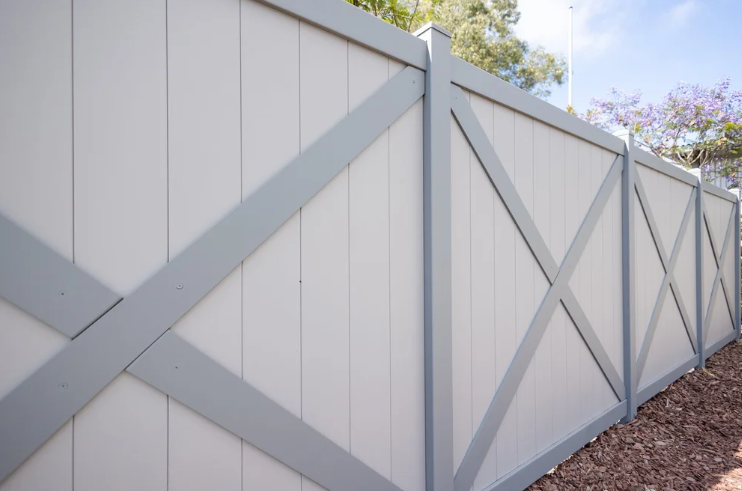
Not every material that gets marketed as fire resistant performs the same way under real conditions. Here's how the main options actually stack up.
Fire Retardant Treated Wood
Fire retardant treated wood is pressure-impregnated with chemicals that slow ignition and reduce flame spread. It's used in construction applications and some fencing products marketed as fire resistant.
The problems with fire retardant wood for exterior fencing in California are significant. The treatment degrades with outdoor exposure over time, which means the fire resistance performance diminishes year over year. Most fire retardant treatments are also not rated for ground contact, which limits how fence posts can be set. And critically, fire retardant treated wood is still combustible. It does not satisfy Zone Zero requirements for non-combustible materials in California fire hazard zones.
Classification: Combustible. Not Zone Zero compliant.
Composite Fencing
Composite fencing blends wood fiber and plastic resin. Some composite products carry Class A ratings under ASTM E84, which indicates low surface flame spread. This is frequently cited in marketing as making composite "fire resistant."
The important distinction: Class A flame spread is not the same as non-combustible. Composite materials are combustible. They can and do ignite under sustained fire exposure. For Zone Zero compliance, where the standard is non-combustible or certified ignition-resistant materials, composite fencing products generally do not qualify. Always ask for specific CAL FIRE listing documentation before assuming any composite product meets Zone Zero requirements.
Classification: Combustible. Not Zone Zero compliant in most cases.
Aluminum Fencing
Aluminum is non-combustible. It does not ignite or sustain combustion, and it passes the ASTM E136 non-combustibility test. For years it was the go-to upgrade from wood for California homeowners concerned about fire.
Two important caveats apply. First, not all aluminum fencing products are on the CAL FIRE approved building materials list. Non-combustibility at the material level and CAL FIRE listing at the product level are different things. If you're purchasing aluminum fencing for Zone Zero compliance, ask for the specific CAL FIRE listing number, not just a material spec sheet. Second, aluminum melts at approximately 1,220 degrees Fahrenheit. It won't burn, but it will deform and fail structurally at temperatures a sustained structure fire can reach.
Classification: Non-combustible. Zone Zero compliant only for CAL FIRE listed products.
Masonry and Concrete Block
Concrete masonry units and poured concrete are inherently non-combustible and provide excellent thermal mass, meaning they absorb and slow heat transfer. For high-risk perimeter applications, masonry is one of the strongest options available from a pure fire resistance standpoint.
The practical limitations are cost, weight, and permitting. Masonry walls typically require engineering review and permits regardless of height, they're significantly more expensive than metal fencing, and they're permanent in a way that steel panels are not. For most residential applications, masonry is a supporting element rather than a complete fencing solution.
Classification: Non-combustible. Zone Zero compliant.
Hot-Dipped Galvanized Steel
Hot-dipped galvanized steel is the highest-performing fire resistant fence material available for California residential applications. Steel is non-combustible under ASTM E136, carries an ASTM Class A Fire Rating with Zero Flame Spread, and has a melting point above 2,500 degrees Fahrenheit, well above what residential wildfire conditions typically produce at the fence line.
Beyond the material properties, galvanized steel fence products from MWF Solutions carry specific CAL FIRE listing documentation under Greenfield Metal Systems Inc. dba MWF, Listing #8170, Ignition-Resistant Materials. That listing is the product-level credential that satisfies Zone Zero compliance at the enforcement level: permits, AB 38 defensible space inspections, and insurer documentation.
The hot-dipping process metallurgically bonds zinc to the steel, providing corrosion resistance that holds up in coastal, high-UV, and high-temperature California environments without degrading over time the way chemical treatments do.
Classification: Non-combustible. ASTM Class A. CAL FIRE listed. Zone Zero compliant.
Understanding California's Zone Zero Requirements
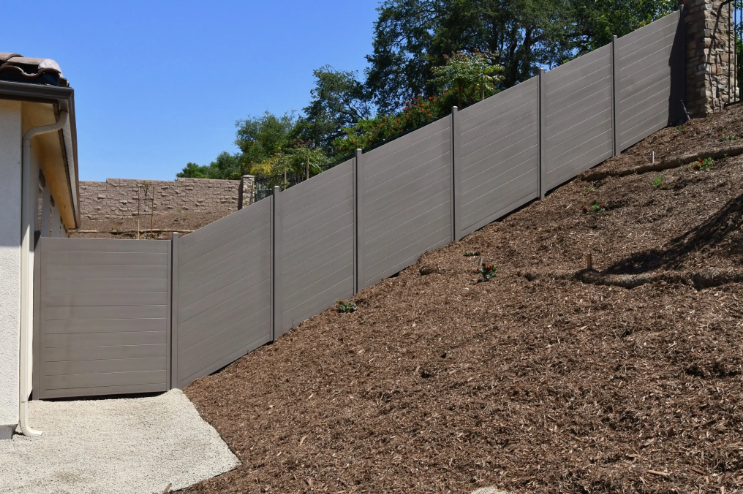
Zone Zero is the area within 0 to 5 feet of your home's structure, decks, and combustible attachments. California now requires that materials within this zone be non-combustible or meet certified ignition-resistant standards for properties in designated fire hazard severity zones.
Enforcement began in 2026, with a three-year compliance window giving most homeowners until 2029 to retrofit existing fences. Importantly, there are no grandfathering provisions. An existing wood fence in Zone Zero is not exempt because it was installed before the regulation took effect.
Some jurisdictions have moved faster than the state timeline. Berkeley enacted a local ordinance in 2025 banning combustible materials within five feet of structures, with re-inspection fees for non-compliance. Los Angeles County fire codes aligned with these standards as of January 2026. San Diego County enforcement is anticipated to begin in early 2027.
The practical implication: if you're in a high or very high fire hazard severity zone and your fence is wood or vinyl, compliance is not optional and the clock is running. Checking your property's status at the CAL FIRE FHSZ viewer is the right first step.
Fire Resistant Fence Panels: What to Look For
When evaluating specific fence panel products, here are the questions that actually matter:
Is the product CAL FIRE listed? This is the non-negotiable starting point for Zone Zero compliance. Ask for the listing number. MWF Solutions carries Listing #8170 under Ignition-Resistant Materials.
What ASTM standards has it been tested to? ASTM E136 for non-combustibility and ASTM E84 for flame spread are the two relevant tests. A product should be able to provide actual test results, not just marketing claims.
Is the material inherently non-combustible or chemically treated? Inherent non-combustibility (steel, aluminum) is permanent. Chemical treatment degrades over time in outdoor environments.
What are the wind load specifications? In California, fire risk and wind risk often arrive together. Santa Ana conditions produce both ember transport and structural wind loads. A fence that satisfies fire code but fails in a wind event isn't solving the problem.
What's the warranty and what does it cover? A 20 to 40-year warranty on a steel product reflects the material's actual lifespan. Shorter warranties on composite or treated wood products reflect their real performance ceiling.
Fire Resistant Privacy Fence Options
For California homeowners who want both fire resistance and privacy, the options narrow quickly to steel-based systems. Here's how the main configurations perform:
Full steel privacy panels like the Canfield and Hayden product lines from MWF Solutions provide complete sightline blocking with solid-wall configurations. Available in 4, 6, 8, and 12-foot heights, these panels satisfy Zone Zero requirements and are paintable to any color.
Steel with IPE wood accents through the Dalton and Rimrock product lines introduce natural wood texture while maintaining a fully non-combustible steel structural frame. The IPE accent panels are dense hardwood with natural moisture resistance, and the steel frame satisfies fire code requirements even where the wood accent is present.
Steel contemporary panels provide partial privacy with open patterns that allow airflow and light while remaining fully non-combustible. These work well for pool enclosures, side yards, and decorative perimeter applications.
All of these configurations can be installed in black, gray, brown, tan, or any custom color using Sherwin-Williams Pro Industrial Marine Grade Topcoat, a paint system designed for industrial and coastal exposure.
What Fire Resistant Fencing Does for Your Insurance
California's home insurance market has been significantly disrupted by wildfire risk, with major carriers pulling out of high-risk areas and premiums rising sharply for those that remain. Home hardening measures, including non-combustible fencing, are increasingly factored into underwriting decisions.
Properties with documented Zone Zero compliance, including non-combustible fencing with CAL FIRE listing documentation, are in a stronger position when negotiating coverage or demonstrating risk reduction to insurers. Some programs offer discounts of 5 to 15 percent for verified wildfire mitigation measures.
Keeping documentation of your fence installation, the product's CAL FIRE listing number, and any inspection compliance reports is worth the effort. Insurers are increasingly asking for this kind of evidence, and having it ready strengthens your position.
Making the Right Selection
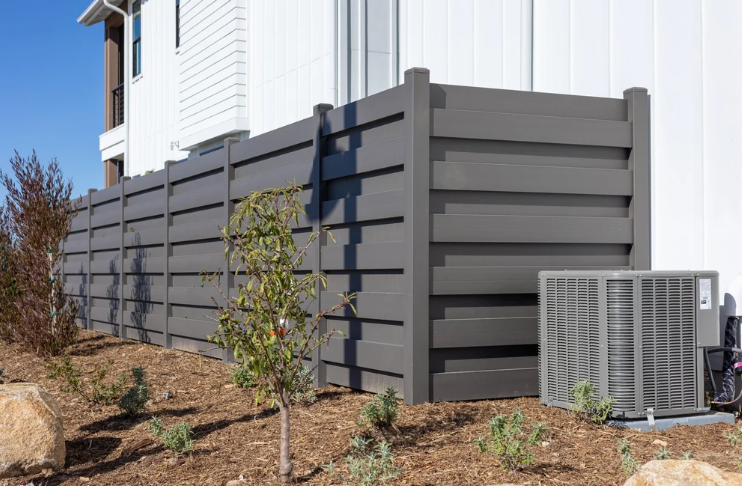
Fire resistant fence selection comes down to one foundational question: is the material inherently non-combustible and does the specific product carry CAL FIRE listing for Zone Zero compliance?
For most California homeowners in fire hazard zones, the answer that satisfies both criteria is hot-dipped galvanized steel from a CAL FIRE listed manufacturer. It's non-combustible by material composition, carries the product-level listing that enforcement actually requires, performs in both fire and wind conditions, and comes in styles that work for privacy, security, and curb appeal.
MWF Solutions manufactures in Southern California, carries significant in-state inventory with delivery times measured in days rather than weeks, and offers product at roughly 30-40% less than the cost of comparable aluminum fencing. For a compliance-driven purchase, that combination of credential and cost is hard to argue against.
Explore MWF Solutions fire resistant fence options
Frequently Asked Questions
What is a fire resistant fence?
A fire resistant fence is one built from materials that resist ignition and flame spread during wildfire conditions. In the strictest sense, the most effective fire resistant fences use non-combustible materials like steel or aluminum that do not burn under ASTM E136 testing standards. For California Zone Zero compliance, products must also carry specific CAL FIRE listing documentation, not just meet general material standards.
What is the best fire resistant fence material?
Hot-dipped galvanized steel is the strongest option for California homeowners. It is inherently non-combustible, carries an ASTM Class A Fire Rating with Zero Flame Spread, has a melting point above 2,500 degrees Fahrenheit, and MWF Solutions products are listed on the CAL FIRE approved materials list under Listing #8170. It also outperforms aluminum on structural strength, wind load performance, and cost.
Does fire retardant treated wood satisfy Zone Zero requirements?
No. Fire retardant treated wood is still combustible. It may carry a Class A flame spread rating under ASTM E84, but that is not the same as non-combustible. Zone Zero compliance in California fire hazard zones requires non-combustible or certified ignition-resistant materials. Fire retardant treated wood does not qualify.
Is composite fencing fire resistant enough for Zone Zero?
Generally no. Some composite products carry Class A ratings under ASTM E84, but Class A flame spread is not the same as non-combustible. Composite fencing is a combustible material and most products do not carry CAL FIRE listing for Zone Zero compliance. Always ask for specific CAL FIRE listing documentation before assuming any composite product meets current requirements.
How do I know if a fence product is CAL FIRE listed?
Ask the manufacturer or supplier for their specific CAL FIRE listing number. Products are listed on the CAL FIRE approved building materials list under the Ignition-Resistant Materials category. MWF Solutions is listed under Greenfield Metal Systems Inc. dba MWF, Listing #8170. If a supplier cannot produce a listing number, their product is not CAL FIRE listed regardless of any other claims.
When do California homeowners need to comply with Zone Zero fence requirements?
Enforcement began in 2026 with a three-year compliance window, giving most homeowners until 2029 to retrofit existing fences. There are no grandfathering provisions. Some jurisdictions are moving faster: Berkeley implemented local ordinances in 2025 and San Diego County enforcement is anticipated to begin in early 2027. Check with your local fire authority for jurisdiction-specific timelines.
Can a fire resistant fence help reduce my homeowner's insurance costs?
Potentially yes. California insurers are increasingly factoring home hardening measures, including non-combustible Zone Zero fencing, into underwriting decisions. Some programs offer discounts for verified wildfire mitigation. Keeping documentation of your CAL FIRE listed fence installation and any defensible space inspection compliance reports strengthens your position when negotiating coverage.