
What Is a Red Flag Warning? What California Homeowners Need to Know
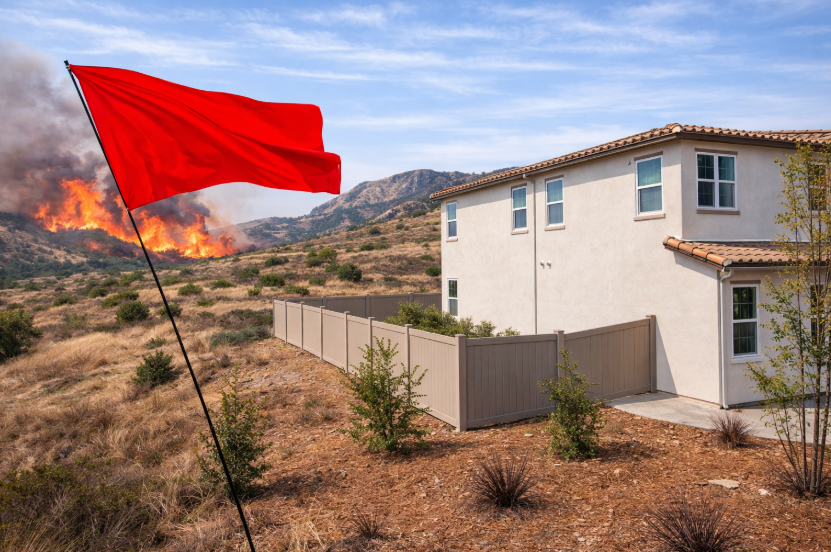
Most people hear "Red Flag Warning" and think about staying off hiking trails or skipping the backyard bonfire. That's part of it. But if you own a home in California, a Red Flag Warning is telling you something more specific and more urgent than general caution.
It's telling you that the conditions are in place for a fire to start instantly, spread rapidly, and be nearly impossible to stop in its early stages. And one of the things most likely to determine how quickly that fire reaches your front door is what your fence is made of.
What Is a Red Flag Warning?
A Red Flag Warning is the highest fire weather alert issued by the National Weather Service. It's declared when a specific combination of conditions comes together at the same time: very low humidity, typically below 20 percent, high temperatures, and strong or gusty winds.
Any one of those conditions alone is manageable. All three together create the environment where a single spark from a downed power line, a passing vehicle, or a dry piece of equipment can ignite a fire that travels faster than people can run.
A Fire Weather Watch sits one level below a warning. It means those dangerous conditions are possible within the next 12 to 72 hours. A Red Flag Warning means they're happening now or within the next 24 hours. When a warning is issued, local fire agencies begin repositioning resources, open burning bans go into effect immediately, and residents in fire-prone areas are advised to prepare for potential evacuation.
In Southern California, the conditions that trigger Red Flag Warnings are closely tied to Santa Ana winds, the powerful offshore gusts that push east to west through the mountain passages and out toward the coast. Humidity drops, temperatures rise, and the landscape turns into a tinderbox. The Palisades Fire in January 2025 ignited and grew to a devastating scale under exactly these conditions.
In Northern California, the seasonal equivalent is the Diablo Wind, a northeast offshore pattern that strips moisture from vegetation and produces the same high-ignition environment across the Bay Area and wine country.
Why California Is in a Permanent Elevated Risk State
Red Flag Warnings used to be a seasonal concern. They still spike in fall and early winter when offshore wind patterns are strongest, but the baseline risk has shifted significantly.
As of early 2026, CAL FIRE reports that a developing La Niña pattern is expected to bring below-average precipitation and above-average temperatures through at least May 2026. Southern California is carrying above-normal large fire potential due to well-above-normal temperatures, below-normal precipitation, and active Santa Ana wind activity. Northern California shows near-normal potential in early spring, but reduced snowpack and dry fuels can shift that picture quickly.
The practical reality for homeowners: fire season in California is no longer a season. It's a year-round condition that periodically becomes critical. Red Flag Warnings are the signal that you've entered a critical window, and how your property is set up during that window matters enormously.
What Happens to a Combustible Fence During a Red Flag Event
This is the part most homeowners don't think about until it's too late.
During a Red Flag Warning, embers travel. Winds carry burning material from an active fire front hundreds of feet, sometimes over a quarter mile, ahead of the fire line itself. Those embers land on whatever is in their path: dry grass, wood decking, wood fencing.
A wood fence that runs along the side of your home doesn't just catch fire. It channels it. The fence becomes a direct fuel path that carries the fire from the street, from a neighbor's yard, or from a burning brush pile straight to your structure. By the time flames reach the fence, the fence is already doing the fire's work for it.
The same is true of vinyl fencing. Vinyl melts and ignites, and it burns at high enough temperatures that surrounding material ignites quickly too.
This is exactly why California's Zone Zero requirements focus on the 0 to 5 foot perimeter around your home. That fence running alongside your exterior wall is almost always within Zone Zero. It's also the single most common combustible material homeowners have in that zone, often without realizing it creates a direct connection between an approaching fire and their home's structure.
What Zone Zero Requires
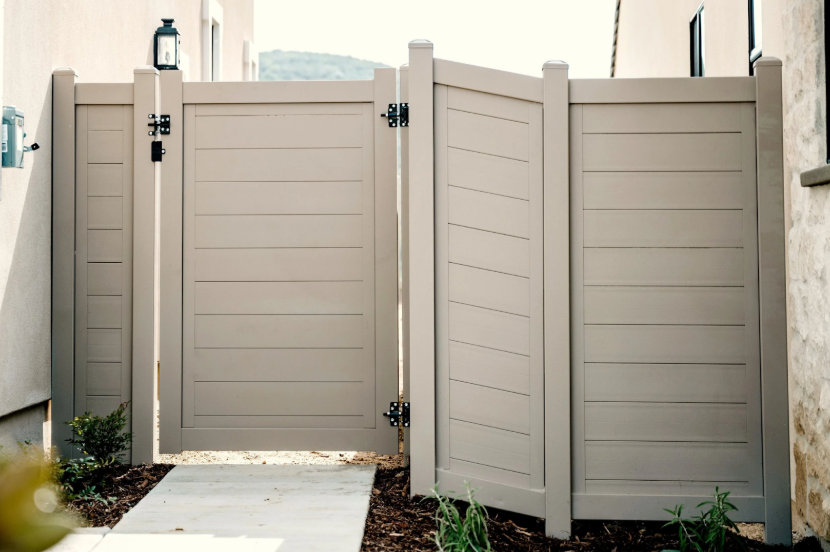
Zone Zero is defined as the area within 0 to 5 feet of your home's structure. California now requires that materials within this zone be non-combustible or meet certified ignition-resistant standards in designated fire hazard severity zones.
That requirement isn't abstract. During a Red Flag event with active embers landing on and near your property, a fence that doesn't meet Zone Zero standards is an immediate structural threat.
Non-combustible materials that satisfy Zone Zero requirements include hot-dipped galvanized steel fencing that carries an ASTM Class A Fire Rating, which indicates Zero Flame Spread. This is the classification held by MWF Solutions' steel privacy fence panels, which are also listed on the CAL FIRE approved building materials list under Greenfield Metal Systems Inc. dba MWF, Listing #8170.
Wood, vinyl, and composite fencing do not meet these standards. Not all aluminum fencing products are CAL FIRE listed either.
What to Do Before, During, and After a Red Flag Warning
Preparation is the only thing that actually moves the needle. Here's how to break it down by phase.
Before a Warning Is Issued
This is when your preparation actually matters. Once a warning is active, the window for meaningful action has closed.
Walk the perimeter of your home and look at what's within 5 feet of every exterior wall, deck attachment, and fence line. Anything combustible in that zone is a liability. Dry leaves, woodpiles, patio furniture made of wood or synthetic materials, and especially wood or vinyl fencing that connects to or runs adjacent to your structure should all be evaluated.
If you have a combustible fence in Zone Zero, that's the most impactful change you can make to your home's fire resilience. It's also a change that requires planning, permitting in some areas, and a lead time to schedule installation.
Check your property's Fire Hazard Severity Zone status at the CAL FIRE FHSZ viewer if you haven't already. The updated 2025 maps expanded the number of properties in designated zones significantly.
Want to see what this looks like in practice? Watch Fire Safe Marin's DIY expert Arann Harris walk through a real home during a Red Flag Warning, clearing combustibles and creating defensible space step by step:
During a Red Flag Warning
Do not use any outdoor equipment with open flames: grills, fire pits, patio heaters.
Avoid using power tools, mowers, or other equipment that can generate sparks near dry vegetation.
Do not smoke outdoors or discard cigarettes in vegetation.
Keep your car off dry grass.
Keep your phone charged and signed up for local emergency alerts.
Have an evacuation plan ready. Know at least two routes out of your neighborhood.
Clear loose combustible debris from your roof, gutters, and porch if you haven't already.
After a Red Flag Event
Once conditions normalize, use the experience as a planning trigger. If your property came through a Red Flag period and you still have a wood or vinyl fence running within Zone Zero, the window to address it is now, not the next time conditions escalate.
The Fence Question Most Homeowners Ask Too Late
After every major wildfire event in California, the post-event analysis tells the same story. Homes that survived in areas of otherwise devastating destruction usually had something in common: non-combustible materials in the immediate perimeter zone, whether that was tile roofing, stucco siding, non-combustible decking, or fire-resistant fencing.
Homes that were lost often had combustible material right at the structure: a wood deck, a wood fence panel along the exterior wall, or vegetation growing against the foundation.
The question homeowners ask after a Red Flag event turned into a fire is almost always some version of: "What could I have done differently?" For a significant number of those homes, the answer includes replacing a combustible fence with one that doesn't feed a fire toward the front door.
MWF Solutions' galvanized steel privacy panels are available in stock in California, manufactured domestically, and can typically be delivered and installed within two weeks. That's a meaningful difference from the 6 to 8 week lead times common with imported or fabricated-to-order competitors.
Don't Wait for the Next Warning
A Red Flag Warning is a signal, not a verdict. But it's also a reminder that the conditions for catastrophic fire are a recurring feature of California life, not an anomaly.
Your fence is one of the most concrete, practical changes you can make to your home's fire resilience. It's visible, it's replaceable, and for most California homeowners it's the only combustible material currently sitting within 5 feet of their exterior walls.
If you're in a fire hazard zone and your fence is wood or vinyl, the next Red Flag Warning is coming. The question is whether you're going to address it before or after.
Learn about Zone Zero compliant fencing from MWF Solutions
Frequently Asked Questions
What is a Red Flag Warning in California? A Red Flag Warning is the highest fire weather alert issued by the National Weather Service. It's declared when very low humidity (typically below 20 percent), high temperatures, and strong winds combine to create extreme wildfire risk. These are conditions where a single spark can ignite a fire that spreads faster than emergency crews can contain it.
What is the difference between a Red Flag Warning and a Fire Weather Watch? A Fire Weather Watch means dangerous conditions are possible within the next 12 to 72 hours. A Red Flag Warning means those conditions are already happening or will arrive within 24 hours. A warning is the higher and more urgent of the two alerts.
What should I do to protect my home during a Red Flag Warning? Avoid any outdoor activities that could generate sparks, including grilling, mowing, or using power tools near dry vegetation. Clear loose combustible debris from your roof and gutters. Keep your phone charged and signed up for local emergency alerts. Have an evacuation plan with at least two exit routes ready.
Why does my fence matter during a wildfire? During a Red Flag event, embers travel ahead of the fire line and land on combustible materials. A wood or vinyl fence running alongside your home creates a direct fuel path that carries fire to your structure. Replacing combustible fencing with non-combustible materials like CAL FIRE listed galvanized steel removes that ignition pathway.
What fencing is safe in a fire hazard zone? Non-combustible fencing materials that meet ASTM Class A fire rating standards and are listed on the CAL FIRE approved building materials list. MWF Solutions galvanized steel panels meet this standard and carry CAL FIRE Listing #8170 under Ignition-Resistant Materials. Wood, vinyl, and composite fencing do not qualify.
What is Zone Zero and does it apply to my fence? Zone Zero is the 0 to 5 foot area immediately around your home's structure. California requires non-combustible or ignition-resistant materials in this zone for properties in designated fire hazard severity zones. If your wood or vinyl fence runs within 5 feet of your exterior walls, it does not meet Zone Zero requirements and creates direct fire exposure risk.