
Aluminum Fence vs. Steel Fence: A Complete Comparison Guide
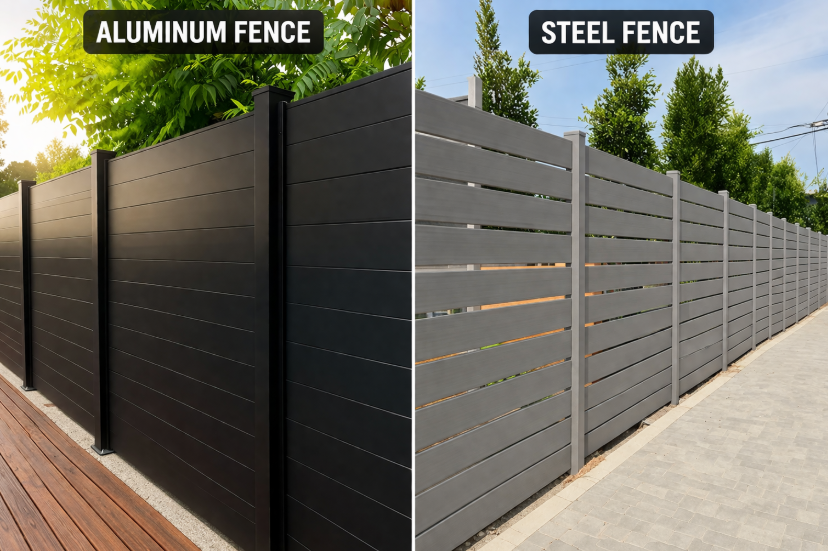
When California homeowners start researching metal fencing, most start with aluminum. It's been the default recommendation for years: low maintenance, rust-resistant, cleaner looking than chain link, better than wood. And for a long time, in most places, it was a reasonable choice.
That calculation has changed. Not because aluminum suddenly became a bad material, but because the conditions specific to California in 2026 expose aluminum's real limitations in a way that most fencing guides haven't caught up with yet.
This is a straight comparison. Both materials get a fair evaluation. By the end, the right choice for your specific situation should be clear.
The Case for Aluminum Fencing
Aluminum has earned its reputation on the basics. It doesn't rust. It's non-combustible as a base material, which puts it ahead of wood and vinyl in a fire context. And for decorative or semi-private applications, it comes in a range of styles that look polished and hold up without requiring much attention.
That said, aluminum's lightweight nature cuts both ways. While it's easier to physically handle on site, the material requires significantly more components than steel: brackets, screws, separate rails, and connection hardware that all need to be assembled in sequence. For a full privacy fence installation, that adds up to more time on site and more potential points of failure over the long term.
For the right application in the right climate, aluminum is a legitimate option. Someone in a mild coastal climate who wants a decorative perimeter fence with no fire hazard exposure and a long maintenance-free horizon has reasonable options in aluminum.
The problems show up when you push on the specifics.
Where Aluminum Falls Short
Aluminum has real strengths, but push on the specifics and a few consistent weaknesses emerge across cost, performance, and California-specific compliance.
Structural Strength
Aluminum is softer than steel. That's not an opinion, it's a material science fact. Aluminum deforms more easily under lateral force, impact, or sustained wind pressure. For a decorative picket fence, that rarely matters. For a full privacy fence panel in a high-wind corridor, it does.
MWF Solutions' galvanized steel privacy panels are dynamic wind load tested to 130 mph sustained winds and 190 mph gusts. That's a documented specification backed by Intertek testing. Most aluminum privacy fence products don't publish comparable dynamic wind load data, and the ones that do don't match those numbers.
California's coastal communities, canyon corridors, and inland valleys all experience serious wind events. Santa Ana conditions in Southern California regularly produce gusts that test fencing installations. A privacy fence that fails in a wind event isn't protecting anything.
Fire Resistance and CAL FIRE Listing
This is where the aluminum vs. steel comparison gets specifically important for California homeowners.
Aluminum is non-combustible. That's a genuine advantage over wood and vinyl. But being non-combustible alone is not the same as being listed on the CAL FIRE approved building materials list for Zone Zero compliance. Not all aluminum fencing products carry that listing.
Zone Zero, the 0 to 5 foot perimeter immediately around your home's structure, requires non-combustible or certified ignition-resistant materials in designated fire hazard severity zones. The distinction matters at the product level, not just the material level. You need the specific product to be listed, not just the general material category.
MWF Solutions steel fence products carry ASTM Class A Fire Rating (Zero Flame Spread) and are listed on the CAL FIRE approved building materials list. That listing is the credential that satisfies Zone Zero compliance at the enforcement level: permits, AB 38 inspections, and insurer documentation.
If you're considering an aluminum fence for a property in a fire hazard zone, ask the supplier for their specific CAL FIRE listing number. If they can't produce one, that product doesn't satisfy Zone Zero requirements regardless of the base material.
Cost: The 2026 Reality
Aluminum fencing has always been more expensive than galvanized steel on a per-linear-foot basis. That gap has widened significantly in 2026.
Aluminum fencing is predominantly manufactured overseas, primarily in China, and imported into the U.S. market. In 2025 and 2026, that supply chain has been hit with a compounding set of cost pressures: macro aluminum prices have surged, China canceled its 13% export tax rebate on aluminum products effective December 2024, and new U.S. import tariffs on aluminum extrusions have added significant landed cost for importers. The result is that aluminum fence pricing has become less stable and harder to predict at the contractor level.
American-made galvanized steel, by contrast, is price-stable. Domestic steel pricing moves on different fundamentals than imported aluminum, and MWF Solutions manufactures in Southern California, which means pricing isn't subject to the same import tariff exposure.
In practical terms, installed aluminum privacy fencing currently runs $135 to $210 per linear foot. MWF Solutions galvanized steel products run $100 to $130 per linear foot for product, with total installed costs that come in at roughly half the aluminum equivalent for a comparable project.
For an average California residential project of 35 to 40 linear feet with two gates, that cost difference is meaningful. Steel gets you a better-performing, code-compliant product at a fraction of the price.
Customization and Color
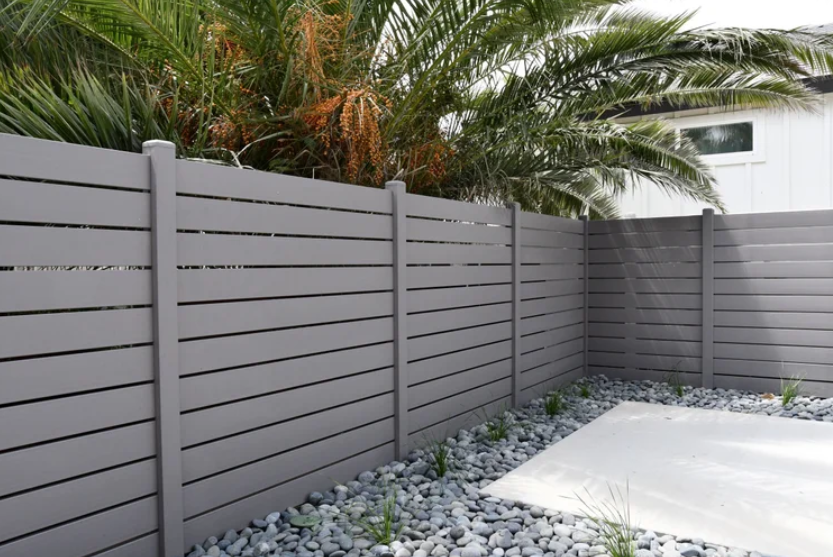
Powder-coated aluminum comes in a standard palette of colors: most commonly black, bronze, and white, with some manufacturers offering a modest range of additional options. Once it's coated, that's the color, and once it's scratched through to bare metal, the section is essentially done. Powder coat cannot be touched up or repainted reliably. The damaged area has to be replaced entirely, which makes impact damage, from a falling branch, a vehicle, or even a wayward ladder, a significantly more expensive problem than it would be with galvanized steel.
Galvanized steel can be painted to any color. That's not a workaround, it's a genuine advantage. If your home has a specific exterior palette, your fence matches it exactly. If you change your home's color, your fence can change too. And hot-dipped galvanized steel's zinc coating provides inherent corrosion resistance that doesn't depend on maintaining a powder coat finish.
Where Aluminum and Steel Are Comparable
To be fair about this comparison, there are areas where the two materials are genuinely close.
Both are non-combustible as base materials. Both are recyclable. Both can be used for privacy applications. Both require significantly less maintenance than wood. And both are visually well ahead of vinyl or chain link for residential curb appeal.
If you're in a climate with no fire exposure and no significant wind load concern, and your project is a simple decorative perimeter fence, the gap between the two materials narrows meaningfully. Aluminum's lighter weight does make installation faster in some configurations.
But most California homeowners reading this aren't in that situation.
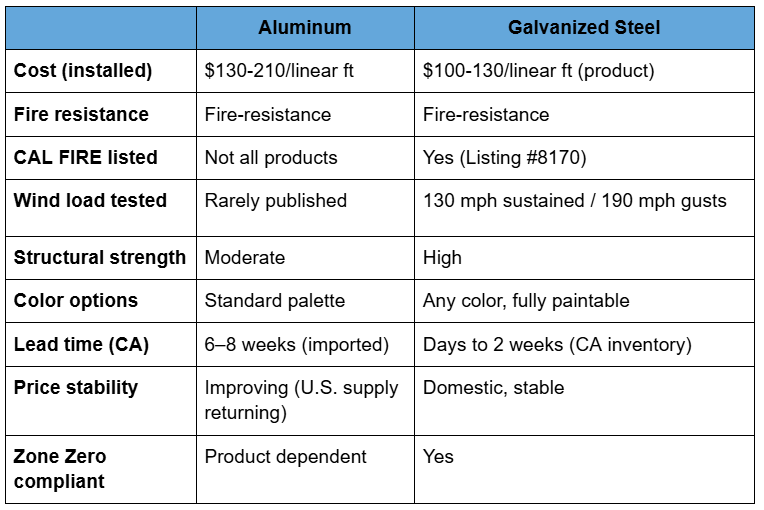
The Head-to-Head Summary
Here's how aluminum and galvanized steel stack up across every dimension that matters for a California homeowner in 2026.
What This Means for Your Fence Decision
Aluminum fencing is not a bad product. It's a reasonable choice in the right context. But for California homeowners in fire hazard zones, the context is specific: you need Zone Zero compliance, you need documented wind load performance, and you need it at a cost that doesn't require you to compromise on material quality to stay within budget.
Galvanized steel satisfies all three. It's the only metal fencing option that consistently checks every box that matters in California right now, at a price point that's actually competitive with wood and vinyl, not just against other metal options.
The question most homeowners are really asking isn't "which is better in theory?" It's "which one should I put around my home, in my fire zone, before the next Red Flag Warning?" That answer is steel.
Explore MWF Solutions steel fencing
Frequently Asked Questions
Is aluminum or steel fencing better for California homes? For California homeowners in fire hazard zones, galvanized steel is the stronger choice on every dimension that matters: fire resistance, wind load performance, CAL FIRE listing, and cost. Aluminum is non-combustible but not all products are CAL FIRE listed for Zone Zero compliance, and it costs roughly twice as much per linear foot installed.
Why is aluminum fencing so expensive right now? Aluminum fencing is predominantly imported, and in 2025 and 2026 import costs have risen significantly due to a combination of higher aluminum futures prices, China canceling its 13% export tax rebate on aluminum products, and new U.S. tariffs on aluminum extrusions. Domestic galvanized steel is not subject to the same pressures and has remained price-stable.
Does aluminum fencing meet Zone Zero requirements in California? Not automatically. Zone Zero compliance requires a specific product to be listed on the CAL FIRE approved building materials list, not just a non-combustible material category. Not all aluminum fencing products carry that listing. Ask any supplier for their specific CAL FIRE listing number before purchasing for use in a fire hazard zone.
How does galvanized steel compare to aluminum on rust resistance? Hot-dipped galvanized steel gets its corrosion resistance from a zinc coating that is metallurgically bonded to the steel during the hot-dipping process. This is a fundamentally different process from powder coating, which sits on the surface and can be compromised by scratches. In coastal California conditions with salt air and UV exposure, hot-dipped galvanized steel performs reliably over a 20 to 40 year lifespan.
Can steel fencing be painted to match my home? Yes. Hot-dipped galvanized steel accepts paint well and can be matched to any color or exterior palette. This is a meaningful advantage over aluminum, which comes in a limited range of factory powder coat colors and cannot be easily repainted without adhesion preparation.
What is the lead time difference between aluminum and steel fencing? Most aluminum fencing is imported or fabricated to order, resulting in 6 to 8 week lead times from most suppliers. MWF Solutions carries significant California inventory and can typically deliver within days to two weeks, which matters when homeowners are responding to active Zone Zero enforcement or preparing for fire season.