
Privacy Fence Materials: The Ultimate Guide to Home Fencing
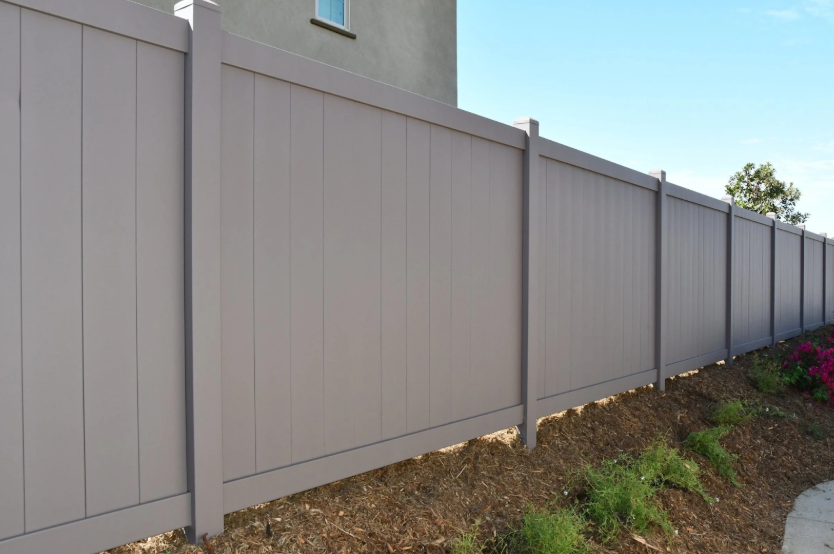
Your fence is the first thing people see when they pull up to your home. Before the front door, before the landscaping, before anything else, there's your fence. And yet, most homeowners spend more time picking out light fixtures than they do figuring out what's actually going up around their property.
That's worth changing.
Privacy fence panels come in a wider range of materials, heights, and styles than most people realize, and the choice you make today will affect your home's security, its curb appeal, and in California, increasingly its safety. This guide walks through everything you need to know so you can make the right call the first time.
What Are Privacy Fence Panels?
Privacy fence products block sightlines from the street, neighbors, or adjacent properties. Unlike open-style fencing (think wrought iron or split rail), privacy fencing creates a solid or near-solid barrier between your yard and the outside world.
Privacy Fence Materials: What You're Actually Choosing Between
Each material comes with its own set of tradeoffs on cost, durability, maintenance, and fire performance. Here's an honest look at all of them.
Wood
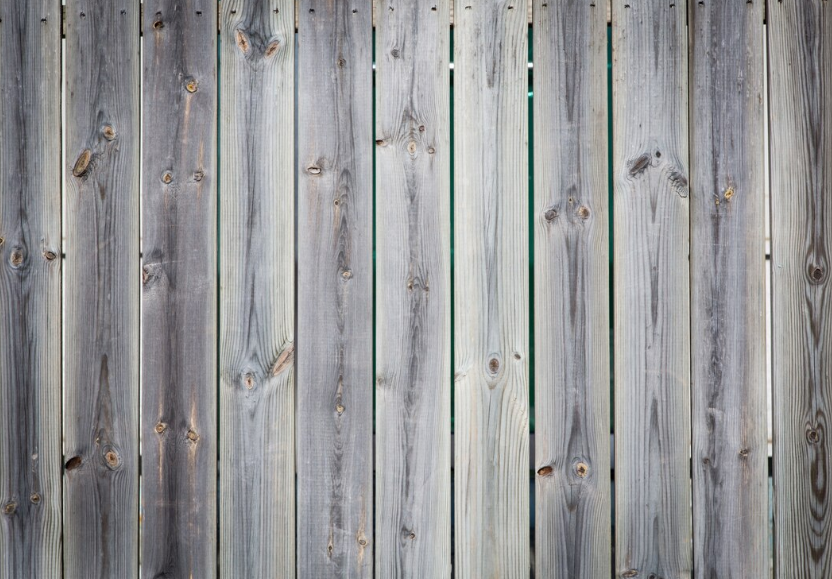
Wood is still the most common privacy fence material in the U.S., mostly because it's familiar and has a low upfront cost. Cedar and redwood are the premium options. They're naturally rot-resistant and age with decent character. Pressure-treated pine is the budget choice.
The problems with wood are predictable: it warps, it splits, it rots, it needs staining or sealing every few years, and it burns. That last point is worth sitting with if you live in California. Wood fencing in a fire-prone zone isn't just a maintenance issue, it's a liability. A wood fence that runs along the side of your house is a direct fuel path to your structure in a wildfire.
Lifespan: 10–20 years with regular maintenance
Fire resistance: None. Wood is combustible.
Vinyl
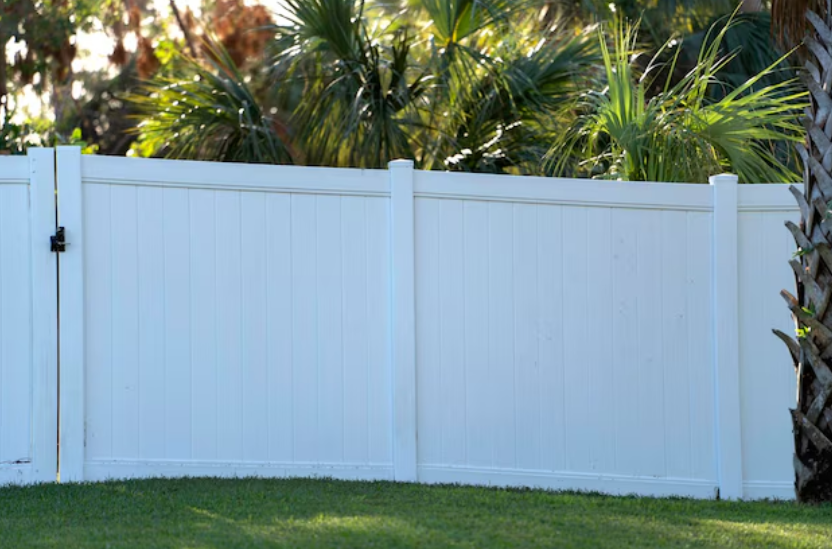
Vinyl privacy fence products have become popular because they're low-maintenance. No painting, no staining, relatively easy to install. They hold color reasonably well and resist moisture.
The downsides: vinyl becomes brittle in extreme heat, fades over time, and has very poor structural strength. It can flex significantly in high wind, and impact damage (a falling branch, a vehicle brushing a corner) tends to crack rather than dent. And like wood, vinyl is combustible. It melts and off-gases toxic fumes when exposed to fire.
Lifespan: 15–25 years
Fire resistance: None. Vinyl melts and burns.
Composite
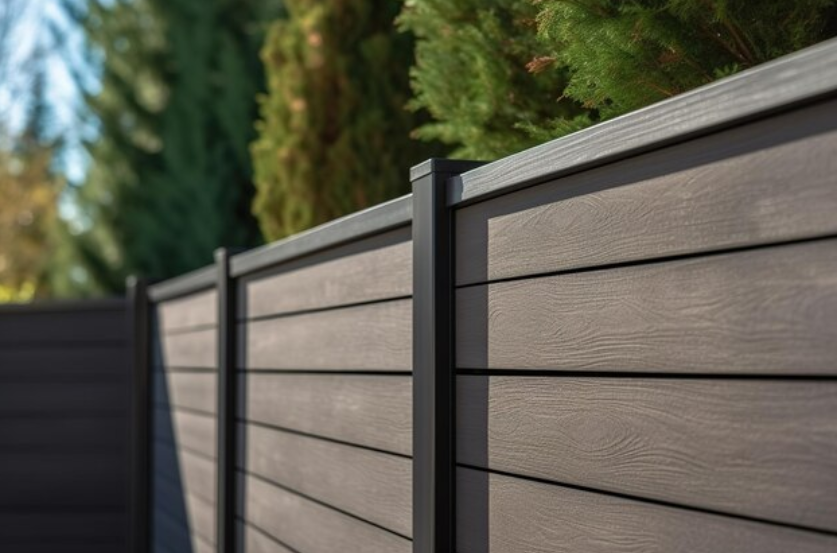
Composite fencing combines wood fibers and plastic resins to mimic the appearance of natural wood while requiring far less maintenance. It's heavier than vinyl and more impact-resistant, but composite panels still have real limitations. They're expensive, the color options are limited, and they're not non-combustible. Most composite materials will ignite or sustain fire in a wildfire scenario.
Lifespan: 20–25 years
Fire resistance: None. Vinyl melts and burns.
Aluminum
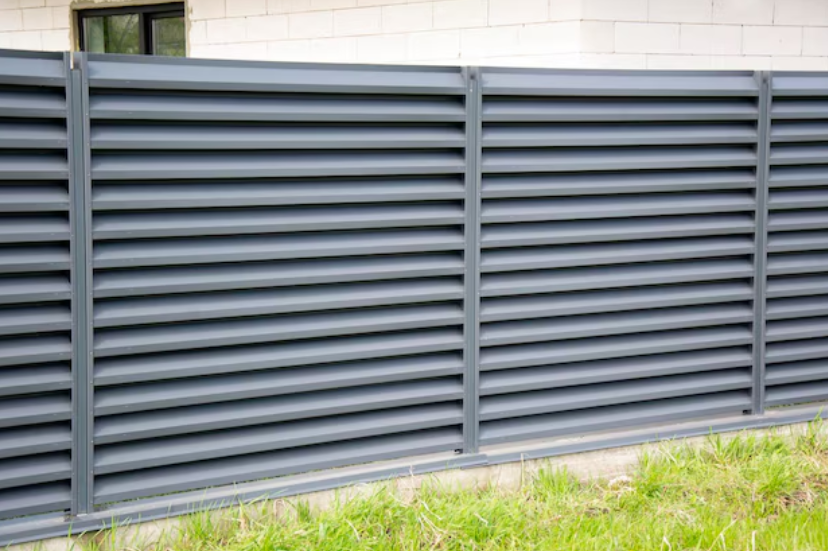
Aluminum is non-combustible and rust-resistant, which puts it well ahead of wood and vinyl on the fire and durability fronts. It's lightweight, easy to work with, and available in a range of styles. For many years it was the go-to metal fencing option for California homeowners wanting something beyond wood.
The issue is cost and structural performance. Aluminum is significantly more expensive than steel, often $100 to $200+ per linear foot installed, and softer as a material, which means it dents more easily and doesn't carry the same wind load ratings as steel. When California began enforcing stricter Zone Zero requirements, aluminum also ran into a credentialing problem: not all aluminum products are on the CAL FIRE-approved materials list.
Lifespan: 20–30 years
Fire resistance: Non-combustible, but not all products are CAL FIRE listed.
Steel (Galvanized)
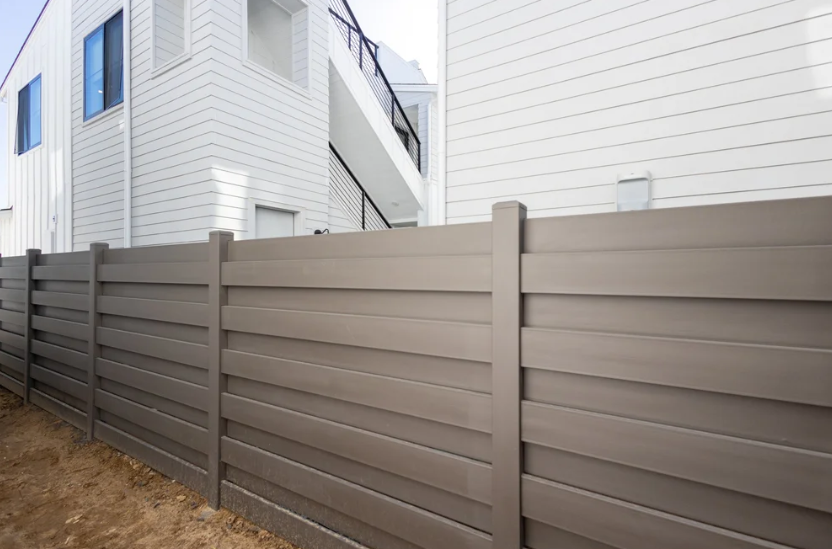
Hot-dipped galvanized steel is the highest-performing privacy fence material available for California homes. Steel is non-combustible, carries a Class A Fire Rating (Zero Flame Spread per ASTM standards), and is the only fencing material that fully satisfies Zone Zero requirements as defined by California's Fire Hazard Severity Zone Maps.
Beyond fire performance, galvanized steel fences are built for longevity. The hot-dipping process bonds a zinc coating metallurgically to the steel, creating a rust-resistant finish that holds up against coastal salt air, UV exposure, and the temperature swings common across Southern California. MWF Solutions' steel privacy options are dynamic wind load tested to 130 mph sustained winds and 190 mph gusts, a specification that aluminum fencing cannot match.
Steel also comes in at roughly half the price of comparable aluminum products, runs between $50 to $70 per linear foot on the product side, and is paintable to any color or finish you want.
Lifespan: 20–40 years depending on coil thickness Fire resistance: ASTM Class A. Zero Flame Spread. CAL FIRE listed.
Privacy Fence Heights: What Works for What
Height is one of the most practical decisions you'll make. Here's a straightforward breakdown:
4 feet works for front yards, garden borders, or pool fencing where partial visibility is fine. It won't block sightlines from neighboring second stories or elevated streets.
6 feet is the standard residential privacy height. It blocks most ground-level sightlines, satisfies the majority of HOA and local code requirements, and provides a solid visual barrier for backyard living spaces.
8 feet is best for properties with elevated neighbors, hillside lots, or anywhere you need serious sightline blocking. Also commonly used for commercial privacy applications and side yards adjacent to busy streets.
12 feet is typically reserved for commercial perimeters, industrial screening, and properties that require both privacy and security at a meaningful scale.
MWF Solutions manufactures steel privacy fence products that can be fabricated into all four heights (4, 6, 8, and 12 feet) with custom fabrication available if your project calls for something specific.
Privacy Fence Styles: More Options Than You'd Think
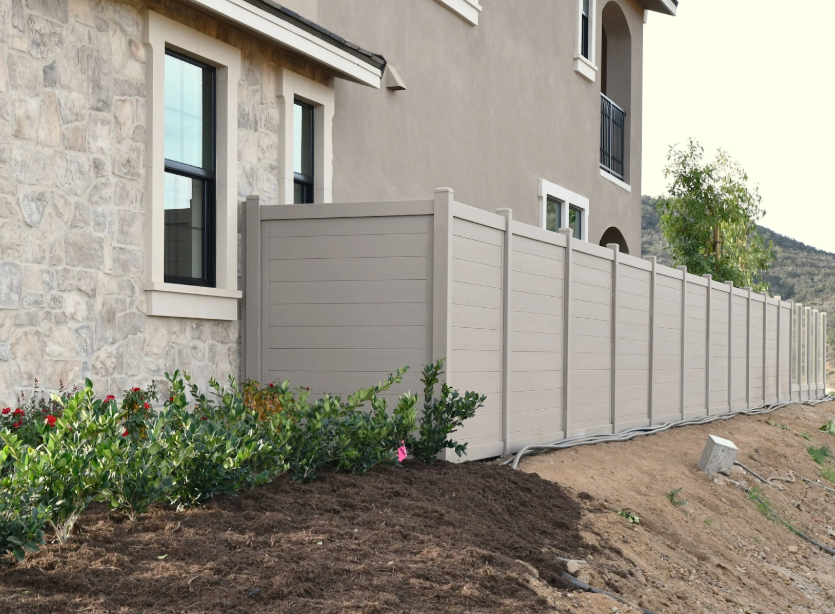
Steel privacy fences aren’t limited to one look or style. The product lines from MWF cover a range of design directions that can match almost any architectural style:
Canfield is a clean, contemporary style available in 2.5" and 4" posts sizes. The tighter slat spacing creates a more solid, wall-like appearance that works well with modern and transitional homes.
Hayden comes in both horizontal and vertical orientations using a 4” post. Horizontal slats read as more modern and architectural. Vertical slats are more traditional and can feel taller visually.
Dalton is a mixed-material fence that pairs steel with either steel or IPE wood accents. This is the option for homeowners who want the warmth of a wood aesthetic without sacrificing fire resistance or structural performance. The IPE version introduces natural wood texture while keeping the structural frame fully non-combustible.
Rimrock is also available with steel or IPE accents and offers a slightly different visual rhythm than the Dalton. Worth comparing side-by-side if you're drawn to the mixed-material direction.
All of these can be painted to any color. That's not a minor point. It means you're not locked into the standard black, bronze, or white that most fencing manufacturers offer. If your home has a specific exterior palette, your fence can match it.
What California Homeowners Need to Know Specifically
Privacy fencing in California isn't just a design decision anymore. Since the release of updated Fire Hazard Severity Zone Maps in 2025, homeowners in high-risk zones have new responsibilities and new exposure if their fence doesn't meet current standards.
Zone Zero Requirements
Zone Zero is the 0 to 5 foot buffer immediately around your home's structure. California now requires that materials placed within Zone Zero be non-combustible or meet specific ignition-resistant standards. A wood or vinyl fence running within 5’ of the side of your house puts you in direct violation if you're in a designated fire hazard zone.
AB 38 Disclosure Requirements
AB 38 requires sellers of homes in high fire hazard severity zones to disclose whether the property is in compliance with defensible space requirements. That's creating real pressure at the transaction level. Buyers are asking about fencing, and non-compliant fences are becoming deal friction.
The CAL FIRE Approved Materials List
CAL FIRE's approved building materials list includes the specific products that satisfy Zone Zero compliance. MWF Solutions (listed as Greenfield Metal Systems Inc. dba MWF) is the only fencing manufacturer on that list. That's not marketing language. It's a documented credential that matters when you're in escrow, talking to your insurer, or simply trying to protect your home from an approaching fire.
How Much Do Privacy Fence Panels Cost?
Cost is one of the first questions homeowners ask, and one of the hardest to answer without context. Here's an honest breakdown of what you're actually looking at in 2026.
Material costs and installed costs are two different numbers. Material-only pricing tells you what the panels and posts cost. Installed pricing includes labor, concrete, hardware, and site prep. When comparing quotes, make sure you're comparing the same thing.
For a standard 6-foot privacy fence, here's the general installed cost range by material:
Wood (pressure-treated pine): $45 to $85 per linear foot installed. Cedar and redwood push toward the higher end. Maintenance costs over time are on top of this.
Vinyl: $55 to $95 per linear foot installed. Lower ongoing maintenance, but combustible and structurally weaker than metal.
Composite: $185 to $250 per linear foot installed. Durable, but expensive upfront and not non-combustible.
Aluminum:$150 to $210 per linear foot installed. Non-combustible, but the most expensive option on the market and not all products carry CAL FIRE listing.
Sheet Metal: $90 to 120 per linear foot. Flimsy material, cannot secure your home.
Steel (galvanized): $110 to $135 per linear foot for product. Installed costs vary by contractor and site conditions, but steel consistently comes in at 30-40% less of aluminum while outperforming it on fire resistance, wind load, and longevity.
For a typical California residential project (around 35 to 40 linear feet with two gates), MWF Solutions customers average around $5,000 total. That puts galvanized steel in a competitive range against wood and vinyl, while delivering a product that actually meets current fire code.
A few things that affect your final number regardless of material: slope and terrain (each adds labor time), old fence removal ($10 to $20 per linear foot extra), permit fees (check with your local municipality), and gate count. Each gate is priced separately from the fence run.
What to Look for Before You Buy
A few things worth confirming before you commit to any privacy fence panel product or contractor:
Is the product CAL FIRE listed? If you're in a fire hazard severity zone, this isn't optional. Ask for the listing number. MWF Solutions' listing number is 8170 under Ignition-Resistant Materials.
What are the wind load specs? California coastal and inland valley properties deal with serious wind events. A privacy fence that fails in a Santa Ana wind event isn't protecting anything. Look for dynamic wind load testing, not just static ratings.
What's the warranty? A 20 to 40-year warranty on a steel product is legitimate. A 10-year warranty on vinyl or composite reflects the material's actual lifespan ceiling.
Can it be painted? This affects long-term cost and design flexibility more than most people realize upfront. Steel can be repainted. Vinyl fades and can't be reliably repainted without adhesion issues.
What's the lead time? Many fencing manufacturers import product or fabricate to order, which means 6 to 8 week lead times. MWF Solutions carries significant California inventory and can typically ship within days to two weeks.
Making the Right Call
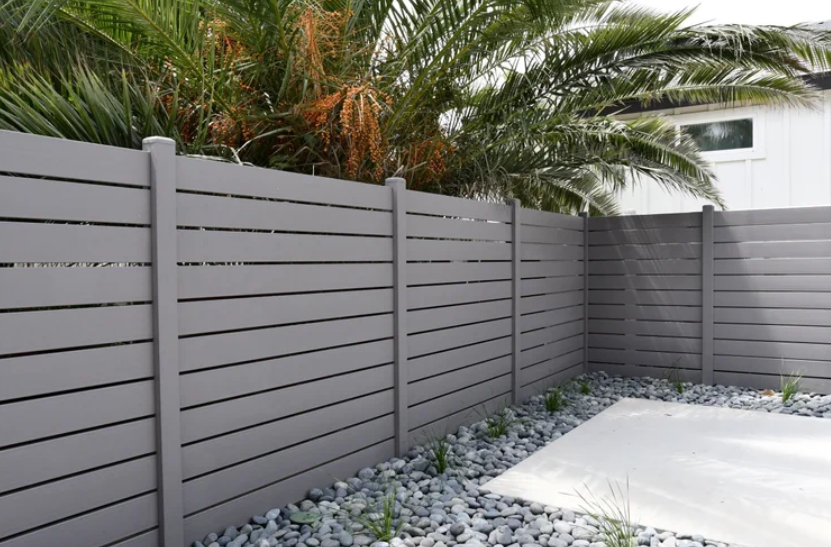
Most homeowners shopping for privacy fence panels are weighing two things: what it costs upfront and what it looks like. Both matter. But there's a third variable that's become impossible to ignore in California, which is what happens when fire season arrives and whether your fence is part of the problem or part of the protection.
Steel privacy fence products from MWF Solutions address all three. They cost roughly 30-40% less than typical competing aluminum products, they come in design options that hold up aesthetically against any material on the market, and they're the only fencing option that carries the fire-resistance credentials California actually requires.
If you're replacing a wood fence, building new, or trying to get your property into Zone Zero compliance, that's where the conversation should start.
Explore MWF Solutions' privacy fence options
Frequently Asked Questions
What is the best material for privacy fence panels? For California homeowners, hot-dipped galvanized steel is the strongest choice in every dimension that matters. It's non-combustible, CAL FIRE listed, dynamic wind load tested, and comes in at roughly half the cost of comparable aluminum products. Wood and vinyl are cheaper upfront but combustible, which creates real liability in fire hazard zones.
How tall should a privacy fence be? Six feet is the standard for most residential backyards and satisfies the majority of local code and HOA requirements. Eight feet works better for elevated lots, hillside properties, or anywhere neighboring sightlines come from above. Four feet is more decorative than private.
Do I need a permit for a privacy fence in California? It depends on your city and county. Most California jurisdictions require a permit for fences over 6 feet, fences in front yards, and fences near property lines or easements. Check with your local building department before starting. Some areas in fire hazard zones may also have specific material requirements that factor into the permit process.
What fencing is required in Zone Zero in California? Zone Zero is the 0 to 5 foot buffer around your home's structure. California requires non-combustible or ignition-resistant materials in this zone. Wood and vinyl fences do not qualify. Steel fencing that meets ASTM Class A fire rating standards does. MWF Solutions products are CAL FIRE listed specifically for Zone Zero compliance (Listing #8170).
How much do privacy fence panels cost? For a 6-foot installed privacy fence, expect $45 to $85 per linear foot for wood, $55 to $95 for vinyl, and $150 to $210 for aluminum. MWF Solutions galvanized steel panels run $110 to $135 per linear foot for product, with a typical residential project averaging around $5,000 installed. Steel offers the best long-term cost per year of service life when you factor in durability and zero combustibility risk.
Can steel fence panels be painted? Yes. Hot-dipped galvanized steel accepts paint well and can be matched to any color or exterior palette. This is a meaningful advantage over vinyl (which fades and resists repainting) and over most aluminum products, which are available in a limited range of factory finishes.
What is the most fire-resistant fence material? Hot-dipped galvanized steel carries an ASTM Class A Fire Rating with Zero Flame Spread, which is the highest fire resistance classification available for fencing materials. Wood, vinyl, and composite materials are combustible. Aluminum is non-combustible but not all aluminum products are on the CAL FIRE approved materials list.
How long do steel fence panels last? MWF Solutions steel panels carry a 20 to 40-year warranty depending on coil thickness selected. The hot-dipping process metallurgically bonds zinc to the steel, creating a corrosion-resistant finish that holds up against coastal salt air, UV exposure, and extreme temperature variation. With proper installation and minimal maintenance, a well-built steel privacy fence should outlast the home's occupancy.